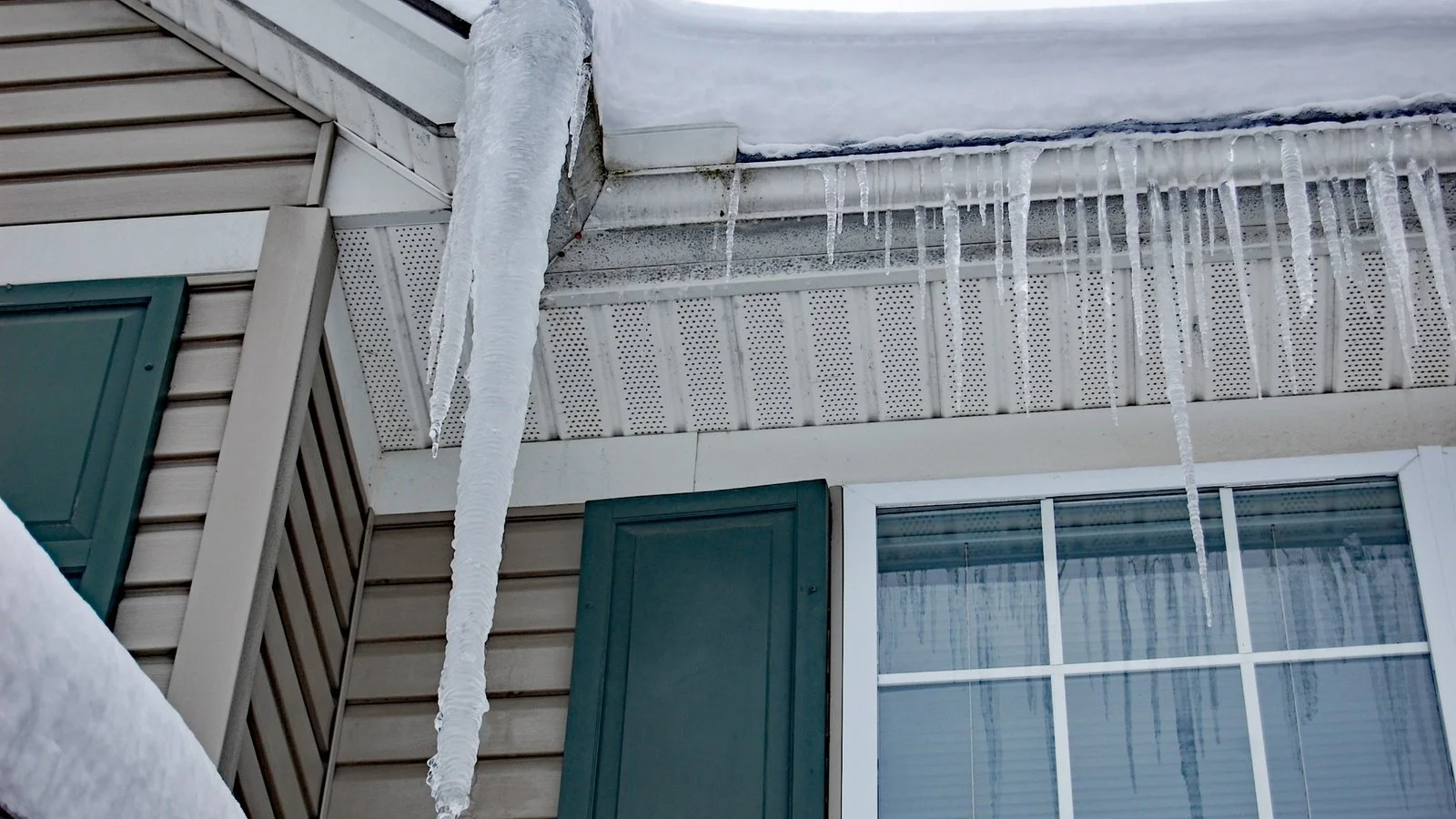
Winter weather can be tough on your home, and your roof often takes the brunt of it. Snow, freezing temperatures, and repeated melting and refreezing can contribute to roof damage, water leaks, and costly repairs. One common winter problem homeowners should understand is ice dams.
Knowing what causes ice dams and how to reduce the risk can help protect your roof and prevent water damage inside your home.
What Causes Ice Dams?
Ice dams form when snow melts on a warmer portion of the roof, runs down toward the colder roof edges, and refreezes. As ice builds up along the eaves, it can prevent additional melting snow from draining properly. Water may then back up beneath the shingles and leak into the attic, walls, or ceilings.
One of the biggest contributors to this is heat escaping from the home into the attic. Poor insulation and air leaks around light fixtures, plumbing vents, and other openings can warm the roof unevenly, creating the conditions that allow ice dams to form.
Take Steps Before Winter Arrives
Preventing ice dams starts with preparing your home before temperatures drop.
Check your attic insulation and air sealing. Proper insulation and sealing gaps between your living space and attic can help prevent heat from escaping and warming the roof.
Clean your gutters and downspouts. Remove leaves and debris in the fall to support proper drainage. While clean gutters alone won't prevent ice dams, keeping them clear helps water drain properly during periods of melting.
Inspect your roof. Look for damaged or missing shingles, worn flashing, and other areas that may allow water to enter. Repairing damaged shingles and worn flashing before temperatures drop can help keep melting snow and ice from finding their way beneath the roof.
Watch for Warning Signs
Large icicles along roof edges, uneven snow melting, and thick ice buildup near the gutters can be signs of potential ice dam problems. Inside your home, watch for water stains on ceilings or walls, peeling paint, and damp insulation.
If you notice signs of a leak, don't wait for the snow to melt completely before addressing the problem. Continued exposure to moisture can damage insulation, drywall, and other parts of your home, and may eventually lead to mold growth.
Know What Not to Do
If ice begins accumulating on your roof, avoid chipping away at it with tools or applying chemicals or heat. These methods can damage shingles and gutters, and working on an icy roof can be dangerous. If snow or ice needs to be removed, consider hiring a qualified professional.
Protect Your Home All Winter Long
A little preparation can go a long way toward protecting your roof during the winter months. By addressing insulation and air leaks, keeping drainage areas clear, and watching for early warning signs, homeowners can reduce the risk of ice dams and avoid preventable winter damage.